
A Place of Shared Experience: Multicultural Transformation of Tea Ceremony
Post-pandemic and with growing access to virtual worlds, physical gathering spaces are in danger of becoming less relevant. Architecture may lose significance to the online commons and finding space for connection becomes an urgent task. While many ritual practices are strongly associated with religion, the tea ceremony, one of the most important rituals in Japanese culture, is unique in that it is non-religious, yet deeply connected to spirituality and sharing.
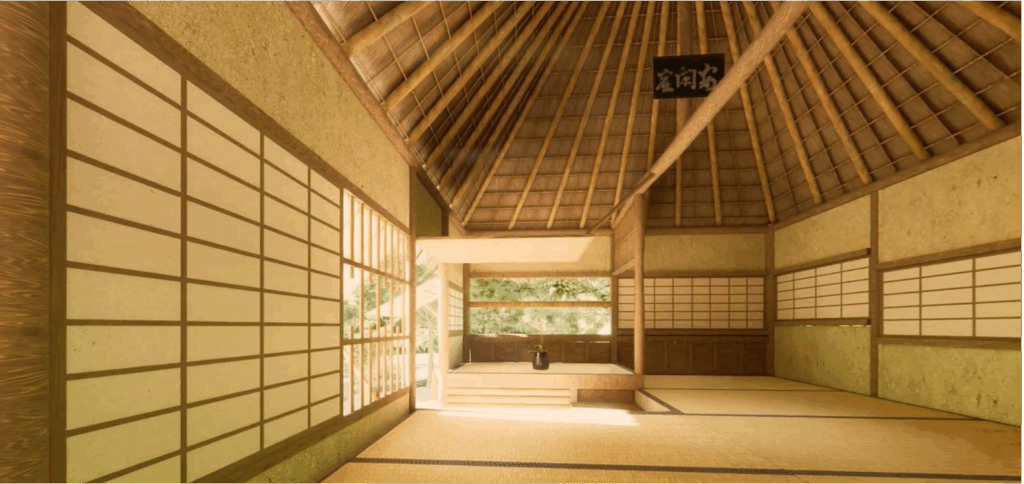
This research studio was conducted during the 2024-25 school year, focused on “A Place of Shared Experience”. Using the Japanese tea ceremony and the spaces dedicated to them as a case study in ritual architecture, students explored the strategies of ritual space in high fidelity. This research provided the opportunity to learn from the tea ceremony and discover strategies to bring the ritual space to multicultural society.
Partnering with Urasenke Tea Ceremony Research Institute and Mr. Reijiro Izumi, Deputy Director of Urasenke, students learned the process of tea ceremony and recreated five important tea ceremony houses digitally. Urasenke is one of the prominent schools of Japanese tea ceremony with a history going back 500 years and chapters located around the world. The access and knowledge they provided was essential to conducting this research.
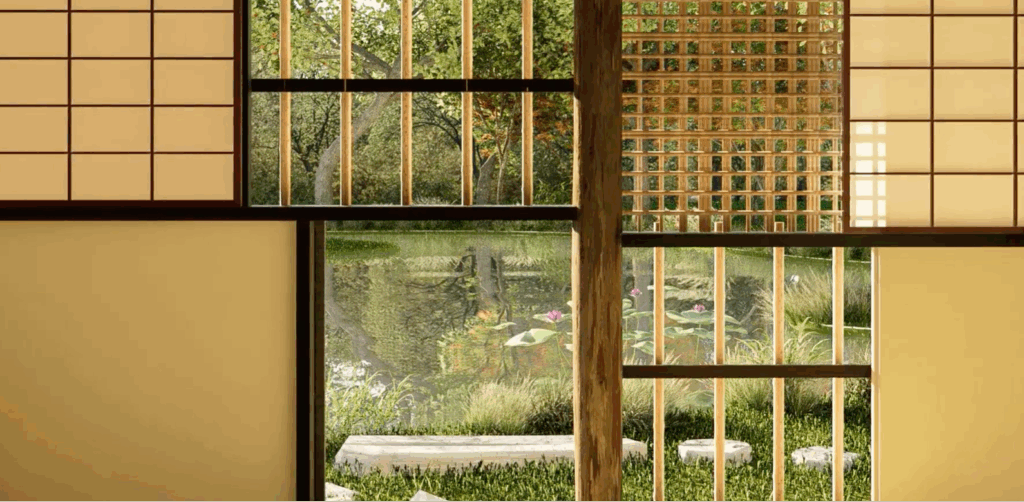
Students recreated Urasenke Konnichian, Yosui Tei, Tei Shingure Tei, Urasenke Yuin, and Urakuan Joan using 3d models. The digital copies these tea houses, executed in a high level of detail, not only enabled students to study the qualities of ritual spaces but also provided outsiders to the tea ceremony with access to those ritual spaces. Through this exercise, the lessons of tea ceremony as a space of shared experience could be shared more widely.
Yosui Tei 擁翠亭, video by Ariel Chen and Julie Wong
Urasenke Yuin 裏千家 又隠, Video by Grace Collins and Hanna Wittmack
Koudaiji Karakasa Tei Shingure Tei 高台寺傘亭・時雨亭, video by Camille Castillo and Jorge Alvarado
Urakuan Joan 有樂苑如庵, video by Mengru Zhou and Jonathan Liao
Urasenke Konnichian 裏千家 今日庵, video by Alix Wilson and Adam Cardenas
Za/座: A Place of Shared Experience @ Global Japan Forum
This course culminated in “ZA/座,” a symposium at The Global Japan Forum hosted by UCLA in partnership with Urasenke, Terasaki Center and The JAPAN HOUSE. The goal of the event was to introduce tea ceremony as the multicultural space of shared experience to a mixed group of design professionals, community members, and tea ceremony practitioners.
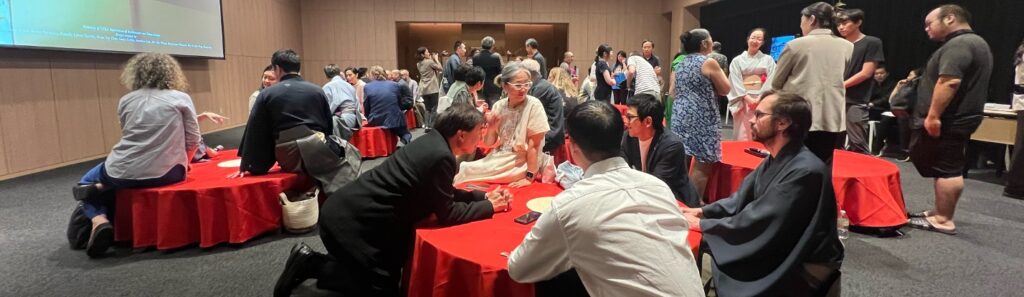
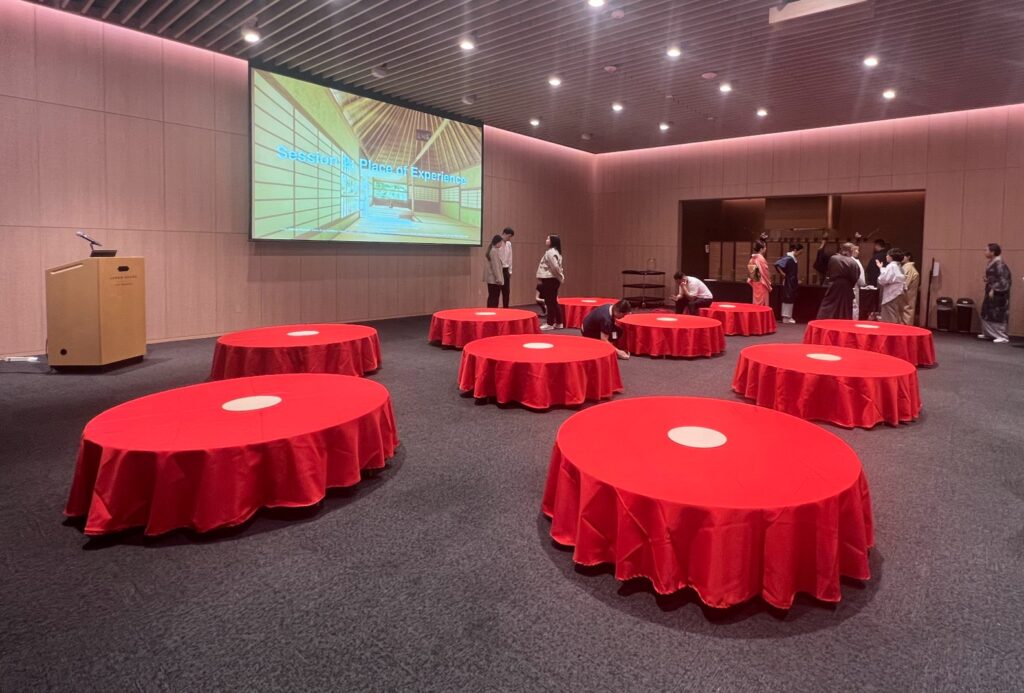
The Global Japan Forum is an event held biennially by the Terasaki Center. The forum is a space to discuss global issues facing Japan with a wider audience that includes the academic community and the general public. ZA/座 was experience-focused using strategies gained from the year of research, such as sharing space, presenting, listening, discussing, and enjoying tea. In large sessions, presenters discussed “experience” and “place” through presentations and discussions. During “Tea & Chat / Small Sessions(小座)” participants connected by sharing tea and conversation, aiming to share experiences across cultures.
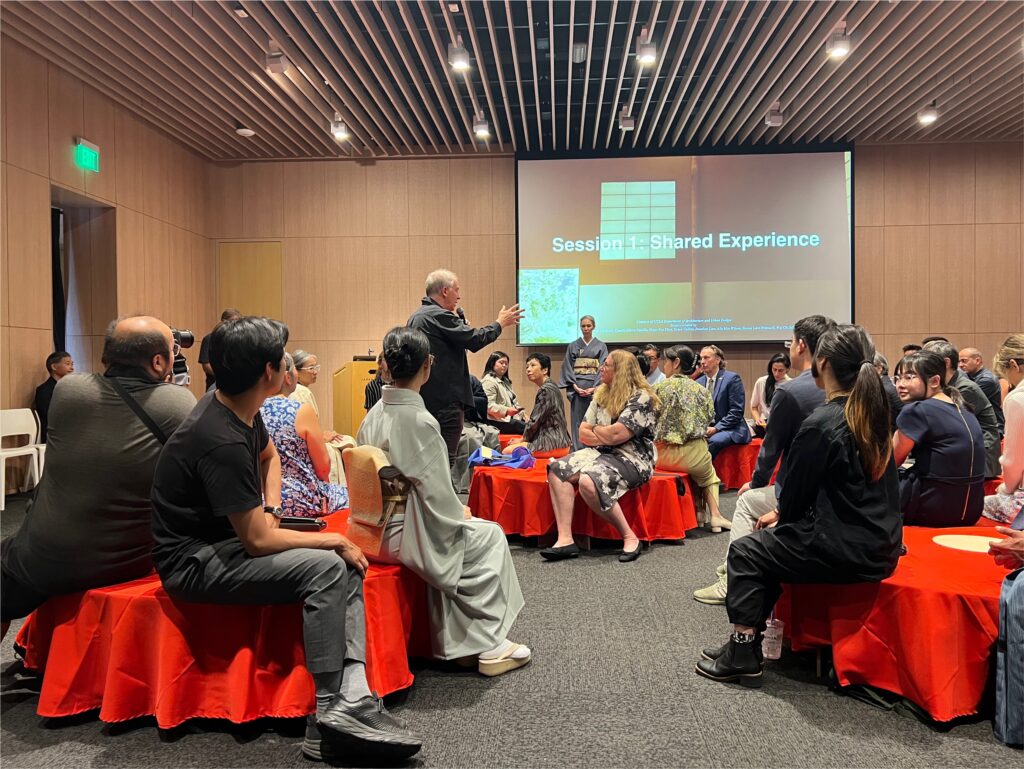
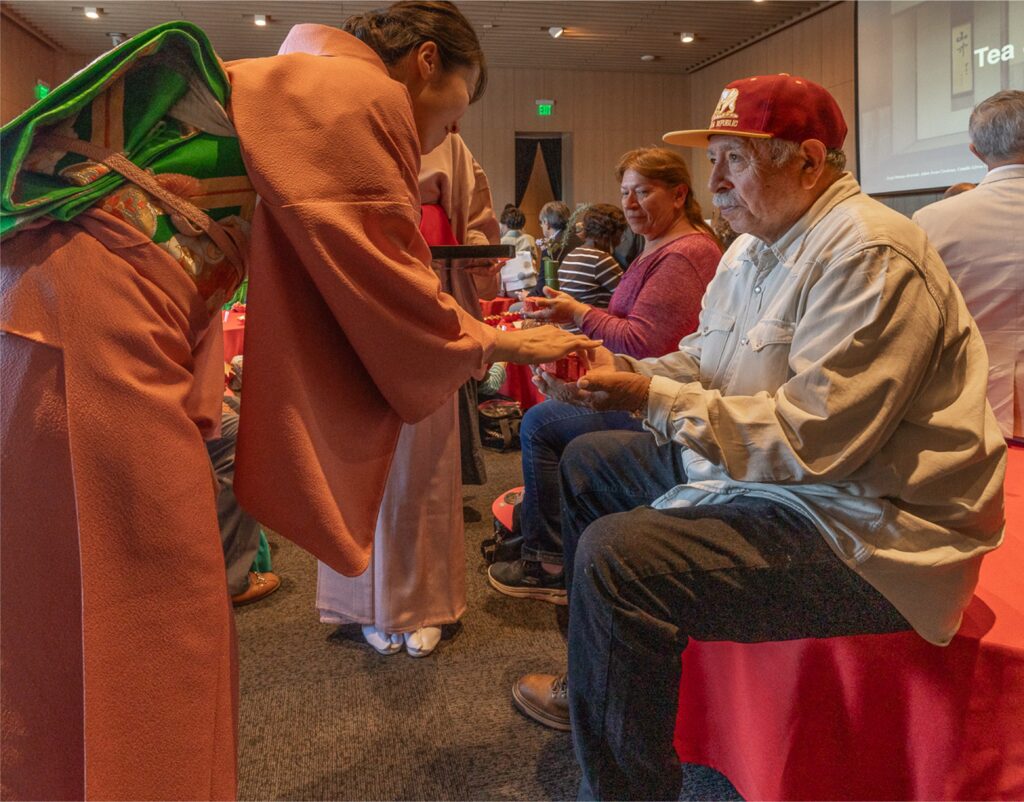
The symposium allowed the general public to enjoy the benefits of tea ceremony. Traditional tea ceremony is normally hard to access, but through the student’s research and the help of Urasenke, the essence of the ceremony was brought to a wider audience during this event.
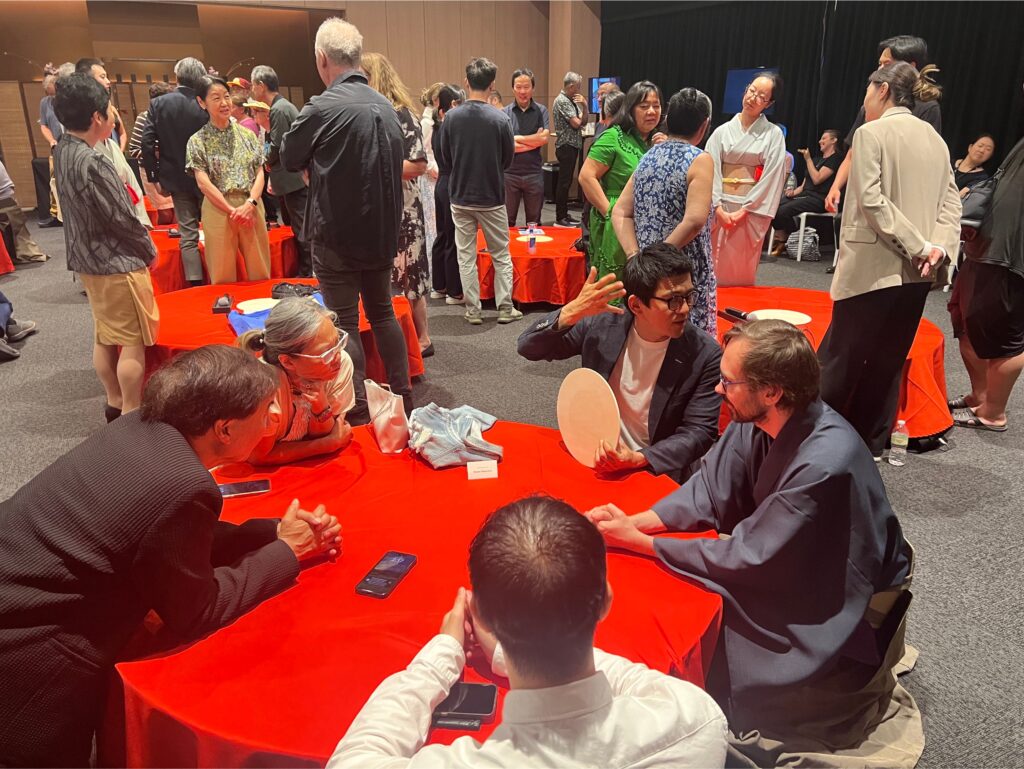
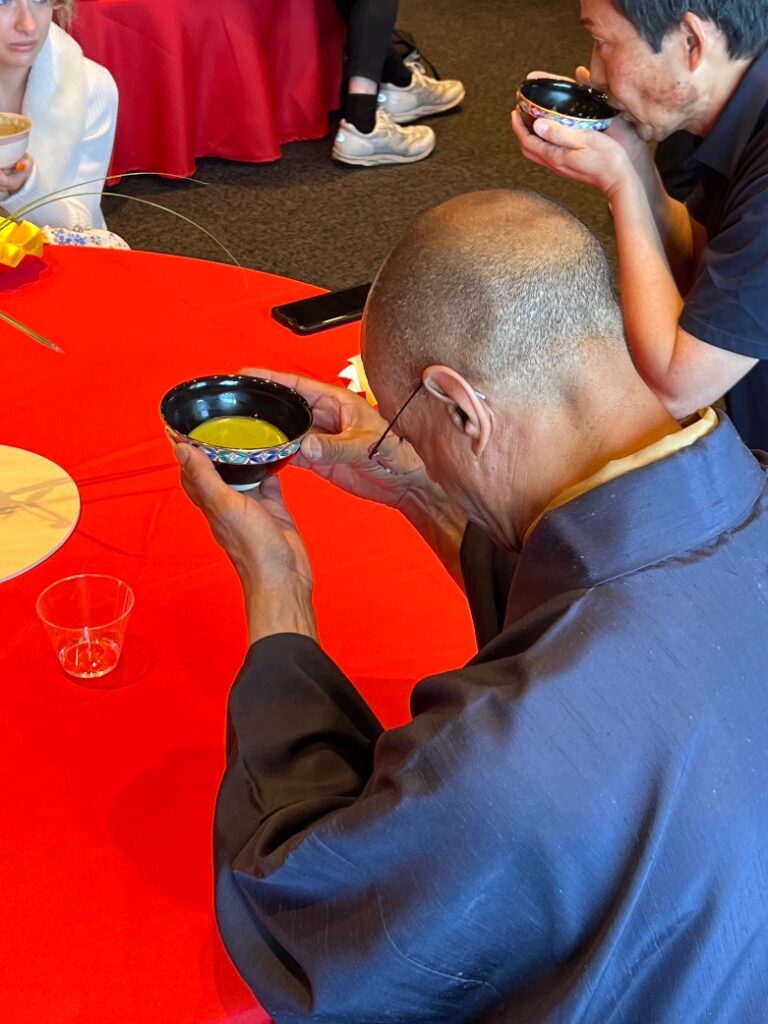
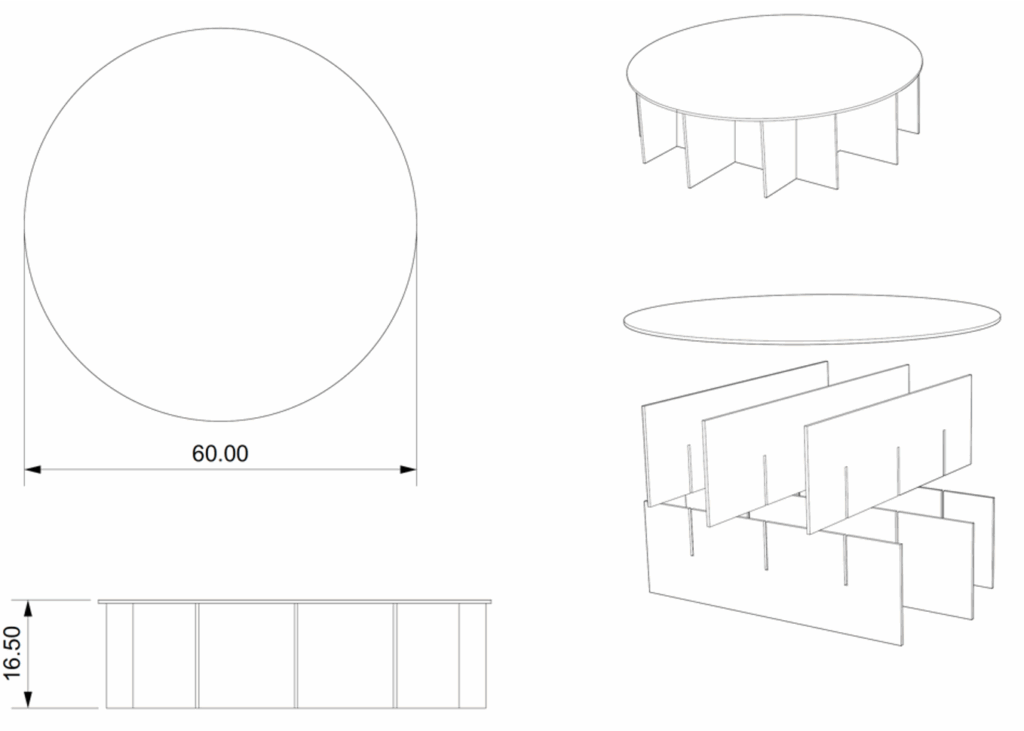
To facilitate the shared experience, the forum was furnished with EN-ZA /円座、, furniture pieces designed by Reijiro Izumi & Hitoshi Abe that could be used as both tables and benches. Participants could sit traditionally or enjoy tea ceremony in a new way using the furniture pieces.
Presented by
JAPAN HOUSE Los Angeles
Organizers
xLAB, University of California, Los Angeles [UCLA]
Urasenke School of Tea Ceremony
Cooperation
UCLA Department of Architecture and Urban Design
UCLA Terasaki Center for Japanese Studies
Executive Producer and Concept Design
Hitoshi Abe / Professor at UCLA, Director of UCLA xLAB
Reijiro Izumi / Urasenke Chado
Speakers
John Graham
Masaki Nakayama, Sony Innovation Studio
Reijiro Izumi, Urasenke Chado
Kunio Kirisako, Kyoto Architectural College
Yusuke Tsugawa, UCLA
Neil Denari, UCLA
Mariana Ibanez, UCLA
Moderators
Michelle Liu Carriger, TFT, UCLA
Michael Osman, UCLA
MC
Marti MeElreath, Terasaki Center